
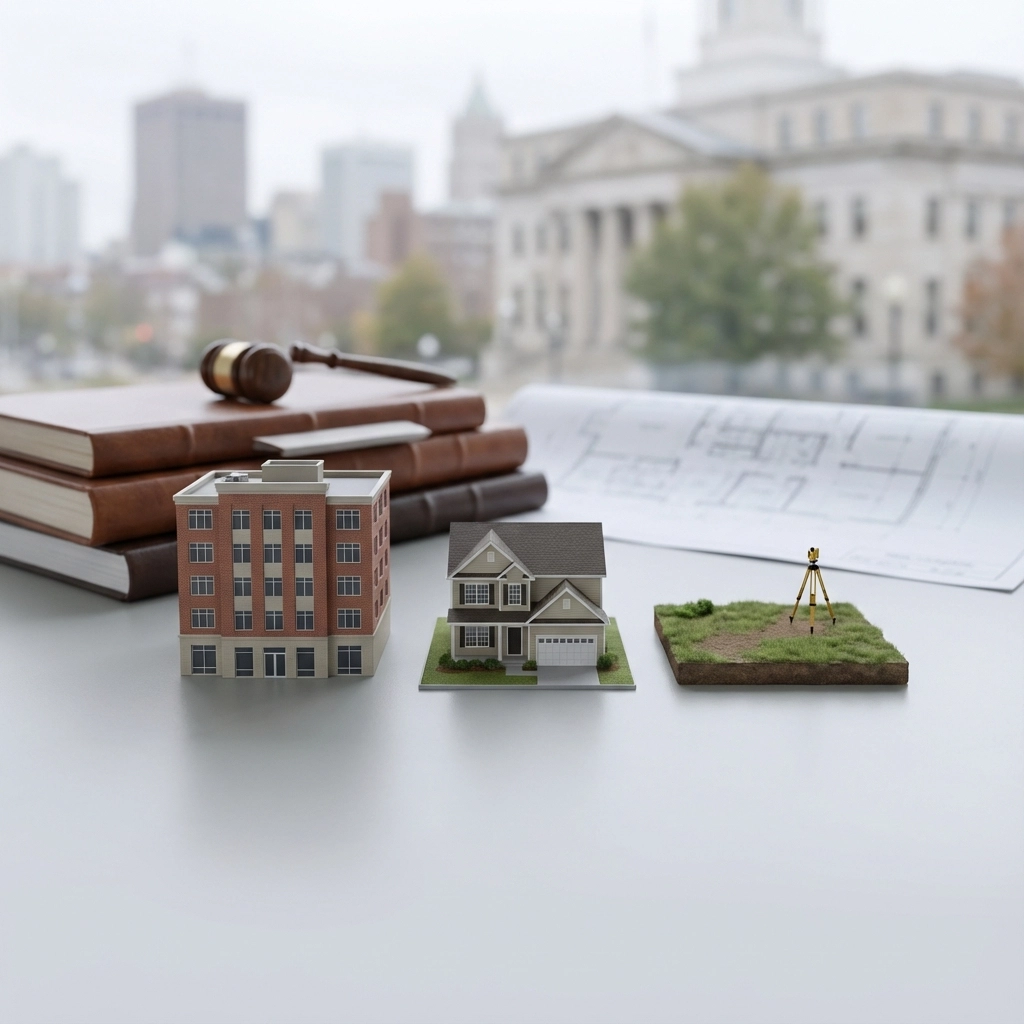
When legal proceedings involve real estate in New Jersey, choosing the wrong type of appraiser can derail your case before it even begins. Whether you're dealing with a divorce settlement, estate dispute, tax appeal, or business litigation, understanding which appraiser specialization you need isn't just helpful: it's critical to your success.
Let's break down the three main types of property appraisals and when each one becomes essential in New Jersey legal cases.
Understanding the Three Types of Property Appraisals
Residential Appraisals
Residential appraisals focus on properties designed for personal living: single-family homes, condos, townhouses, and small multi-family properties (typically 1-4 units). These appraisers specialize in understanding neighborhood dynamics, school districts, local amenities, and how these factors impact home values.
In legal cases, residential appraisers become crucial when you're dealing with:
- Divorce proceedings involving the family home
- Estate settlements where inherited residential property needs valuation
- Tax appeals on your primary or secondary residence
- Personal injury cases where property damage occurred
Commercial Appraisals
Commercial appraisers handle income-producing properties and business real estate: office buildings, retail spaces, warehouses, apartment complexes (5+ units), hotels, and industrial facilities. These professionals understand complex financial metrics like cap rates, net operating income, and market rent analysis.
You'll need a commercial appraiser for legal cases involving:
- Business dissolution or partnership disputes
- Commercial lease disputes
- Condemnation proceedings affecting business property
- Estate planning for business owners with commercial real estate

Land Appraisals
Land appraisers specialize in vacant or undeveloped property, focusing on factors like zoning potential, soil conditions, access to utilities, and development possibilities. They understand how future land use affects current value.
Land appraisals become essential in:
- Development disputes or zoning challenges
- Agricultural property divisions in estates
- Condemnation cases involving undeveloped land
- Environmental litigation affecting property value
Why Specialization Matters in Legal Cases
Here's the reality: while many appraisers hold general licenses, specialization makes or breaks your case in court. New Jersey courts scrutinize appraisal methodology closely, and judges expect appraisers to demonstrate deep expertise in their property type.
A residential appraiser trying to value a shopping center won't understand the nuances of retail lease structures or market rent analysis. Similarly, a commercial appraiser might miss critical residential market factors that significantly impact a home's value.
New Jersey's Legal Standards for Appraisals
New Jersey recently updated its Real Estate Appraisal Act to ensure appraisals meet strict accuracy and equity standards. Courts require appraisers to follow established methodologies, including the direct sales comparison approach, income capitalization approach, and cost approach, depending on the property type.
More importantly, New Jersey judges can't simply pick the appraisal they prefer without proper evidentiary support. Your appraiser must independently demonstrate the property's actual value through credible verification methods: making expertise in your specific property type even more crucial.
Choosing the Right Appraiser for Common Legal Scenarios
Divorce Cases
For the family home: Choose a residential appraiser familiar with your specific neighborhood and school district. They'll understand local market nuances that significantly impact value.
For investment properties: If you own rental properties or commercial real estate, you'll need a commercial appraiser who understands income-producing property valuation methods.
For vacant land: Whether it's a building lot or larger parcel, a land appraiser will properly assess development potential and zoning implications.

Estate Planning and Probate
Estate cases often involve multiple property types, requiring different appraisal specializations:
- Primary residence: Residential appraiser
- Business property: Commercial appraiser
- Undeveloped land or farms: Land appraiser
- Mixed-use properties: May require both residential and commercial expertise
Tax Appeals
New Jersey property tax appeals require appraisers who understand both market valuation and assessment methodology. The appraiser you choose should have specific experience with tax appeal cases in your municipality, as assessment practices vary significantly across New Jersey counties.
For residential properties, choose someone familiar with comparable sales in your specific town. For commercial properties, select an appraiser experienced with income approach methodology, as this often becomes central to commercial tax appeals.
Business Litigation
When businesses face dissolution, partnership disputes, or litigation involving real estate assets, commercial appraisers become essential. They understand how business operations affect property value and can separate real estate value from business goodwill: a critical distinction in many legal cases.
Red Flags When Selecting an Appraiser
Avoid appraisers who:
- Claim they can "handle any property type" without demonstrating specific expertise
- Don't ask detailed questions about your property and legal case
- Can't provide references for similar legal cases
- Quote fees significantly below market rates (quality appraisals require time and expertise)
- Don't hold appropriate certifications for your property type
Understanding Appraiser Credentials in New Jersey
All New Jersey appraisers must hold state licenses, but additional certifications matter for complex legal cases:
- Certified Residential Appraisers: Can appraise residential properties without value limits
- Certified General Appraisers: Can appraise any property type, including complex commercial properties
- Licensed Residential Appraisers: Limited to residential properties under $1 million and simple commercial properties under $250,000
For legal cases, certified appraisers typically provide more credibility due to their advanced education and experience requirements.

The Cost Factor: Why Cheap Isn't Better
Legal appraisals cost more than typical mortgage appraisals because they require extensive research, detailed reporting, and potential court testimony. Expect to pay:
- Residential legal appraisals: $600-$1,200
- Commercial legal appraisals: $2,500-$7,500+ depending on complexity
- Land appraisals: $1,000-$3,000 depending on size and complexity
Remember, a thorough appraisal that stands up in court protects assets worth far more than the appraisal fee.
Working with Your Attorney
Your real estate attorney should help identify which type of appraiser you need, but don't assume they automatically know the best choice. Provide details about your property type, legal case goals, and timeline. Many attorneys work with preferred appraisers who understand legal reporting requirements and can provide effective testimony if needed.
Making Your Decision
The right appraiser for your New Jersey legal case depends on three factors: your property type, your legal situation, and the appraiser's specific expertise. Don't let the wrong choice undermine your case: take time to verify credentials, ask about relevant experience, and ensure your appraiser understands both property valuation and legal requirements.
When property values become central to legal proceedings, specialized expertise isn't just helpful: it's essential for protecting your interests and achieving favorable outcomes in New Jersey courts.
For professional appraisal services across all property types in New Jersey legal cases, Esteemed Appraisals provides certified expertise tailored to your specific needs and legal requirements.