
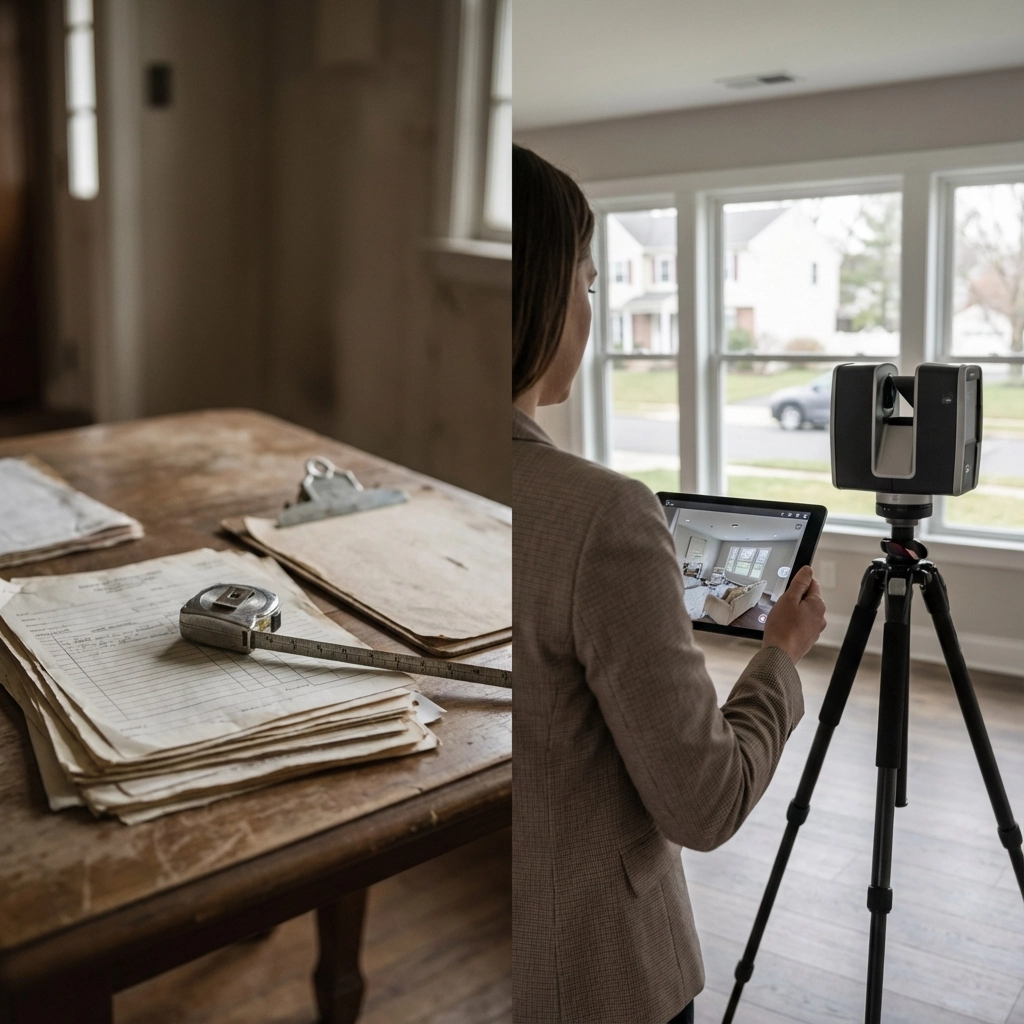
The real estate appraisal industry is experiencing its biggest transformation since the adoption of digital cameras. While traditional clipboard-and-tape-measure methods have served appraisers for decades, New Jersey's forward-thinking appraisal firms are embracing 3D scanning technology to deliver faster, more accurate valuations.
But does this mean traditional methods are completely obsolete? Not quite. The reality is more nuanced, and understanding how these technologies work together can help property owners, lenders, and real estate professionals make better decisions.
The Foundation: What Traditional Appraisal Methods Actually Involve
Traditional property appraisals have relied on a time-tested approach that combines physical inspection, manual measurements, and comparable sales analysis. An appraiser would visit the property, spend 1-3 hours measuring rooms, noting features, and documenting the condition of everything from flooring to HVAC systems.
This process typically includes:
- Hand-measuring each room with a tape measure
- Sketching floor plans on paper or tablets
- Photographing key features and defects
- Researching comparable sales in the area
- Writing detailed reports based on observations
While thorough, this method has significant limitations. Weather delays, scheduling conflicts, and the sheer time required for complex properties can push appraisal timelines to 7-14 days or longer. In New Jersey's competitive real estate market, where deals can fall through over appraisal delays, speed matters.

Enter 3D Technology: More Than Just a Cool Gadget
3D scanning technology isn't replacing traditional appraisal expertise: it's amplifying it. Modern 3D scanners, including devices like the Matterport Pro camera and similar systems, can capture an entire property's interior in photorealistic detail within 30-60 minutes.
These scanners work by taking hundreds of infrared measurements per second, creating precise 3D models that include:
- Exact room dimensions down to the inch
- Ceiling heights and architectural details
- Built-in furniture and fixture locations
- 360-degree panoramic views of each space
The technology produces several outputs simultaneously: traditional floor plans, 3D virtual tours, and precise square footage calculations. What used to require multiple site visits can now be accomplished in a single session.
Speed Without Sacrificing Accuracy
The speed improvement is dramatic, but accuracy remains paramount in appraisal work. 3D scanning actually enhances precision in several ways:
Measurement Accuracy: Laser measurements eliminate human error from tape measure readings. The technology is accurate to within 1% of actual dimensions, often more precise than manual measurements.
Comprehensive Documentation: Traditional methods might miss details due to time constraints. 3D scans capture everything, allowing appraisers to review spaces virtually and spot features they might have overlooked during the initial visit.
Weather Independence: Rain, snow, or extreme heat no longer delay exterior measurements. Many 3D systems work effectively in various conditions, reducing scheduling complications common in New Jersey's variable climate.

Real-World Applications in New Jersey's Market
New Jersey's diverse property types: from Jersey Shore beach houses to historic Newark brownstones: present unique appraisal challenges that 3D technology addresses effectively.
Complex Layouts: Victorian homes with irregular room shapes and multi-level additions can be challenging to measure manually. 3D scanning captures these complexities accurately without multiple return visits.
Commercial Properties: Large warehouses, office buildings, and retail spaces that might require full days of traditional measurement can be documented in hours with 3D technology.
High-Value Properties: Luxury homes often have intricate architectural details and custom features that benefit from comprehensive 3D documentation, providing more thorough appraisal support.
Legal Proceedings: In divorce or estate situations where precise documentation is crucial, 3D scans provide indisputable evidence of property conditions at specific points in time.
Benefits for Different Stakeholders
The technology's impact extends beyond appraisers to everyone involved in real estate transactions:
Homeowners experience faster turnaround times, reducing the stress of waiting for appraisal results during refinancing or sales processes. The 3D tours also provide excellent documentation for insurance purposes.
Lenders receive more comprehensive reports with better visual documentation, supporting more confident lending decisions and potentially reducing liability concerns.
Real Estate Agents can use 3D tours for marketing while the appraisal is being completed, maximizing efficiency during the listing process.
Insurance Companies benefit from detailed property documentation that can streamline claims processes and property evaluations.

The Human Element Remains Essential
Despite technological advances, experienced appraisers remain irreplaceable. 3D scanning captures physical dimensions and visual details, but it cannot:
- Assess property condition and quality
- Identify structural issues or needed repairs
- Evaluate neighborhood factors and market trends
- Apply professional judgment about comparable sales
- Navigate complex zoning or legal considerations
The most effective approach combines 3D technology's speed and precision with an appraiser's expertise and market knowledge. Technology handles the measurement and documentation; professionals provide the analysis and valuation.
Cost Considerations and ROI
Implementing 3D technology requires significant upfront investment. Professional-grade 3D cameras range from $3,000 to $15,000, with additional costs for software subscriptions and training.
However, the return on investment becomes clear through:
- Increased volume capacity due to faster turnaround times
- Reduced travel costs for re-inspections
- Enhanced service differentiation in competitive markets
- Improved client satisfaction through faster delivery
For established appraisal firms in New Jersey's active real estate market, the technology often pays for itself within 6-12 months.
Looking Ahead: The Future of Property Valuation
The integration of 3D technology with artificial intelligence and automated valuation models suggests even more dramatic changes ahead. Future developments might include:
- AI-powered property analysis using 3D scan data
- Integration with public records and MLS systems
- Real-time comparable sales analysis during property visits
- Enhanced virtual inspection capabilities for remote appraisals
However, regulatory requirements and industry standards evolve slowly. Traditional methods will likely remain important for certain property types and legal situations, even as technology becomes more sophisticated.

Making the Right Choice for Your Needs
Property owners and industry professionals should consider several factors when choosing appraisal services:
Timeline Requirements: If you need results within 24-48 hours, firms using 3D technology offer significant advantages.
Property Complexity: Unique or complex properties benefit more from comprehensive 3D documentation than standard residential homes.
Intended Use: Legal proceedings, insurance claims, and high-value transactions may warrant the additional precision 3D technology provides.
Budget Considerations: While 3D-enhanced appraisals may cost slightly more, the time savings often offset additional fees.
The Verdict: Evolution, Not Revolution
Traditional appraisal methods aren't dead: they're evolving. 3D technology represents a powerful tool that enhances rather than replaces fundamental appraisal skills and knowledge.
The most successful appraisal firms, including those serving New Jersey's diverse real estate markets, are integrating these technologies thoughtfully rather than abandoning proven methods entirely. They understand that clients want both speed and accuracy, and modern technology enables delivery of both.
For property owners, lenders, and real estate professionals, the key is working with appraisers who leverage appropriate technology for each situation while maintaining the expertise and attention to detail that ensure reliable valuations.
The future of real estate appraisal lies not in choosing between traditional and modern methods, but in combining the best of both approaches to serve clients more effectively than ever before.